
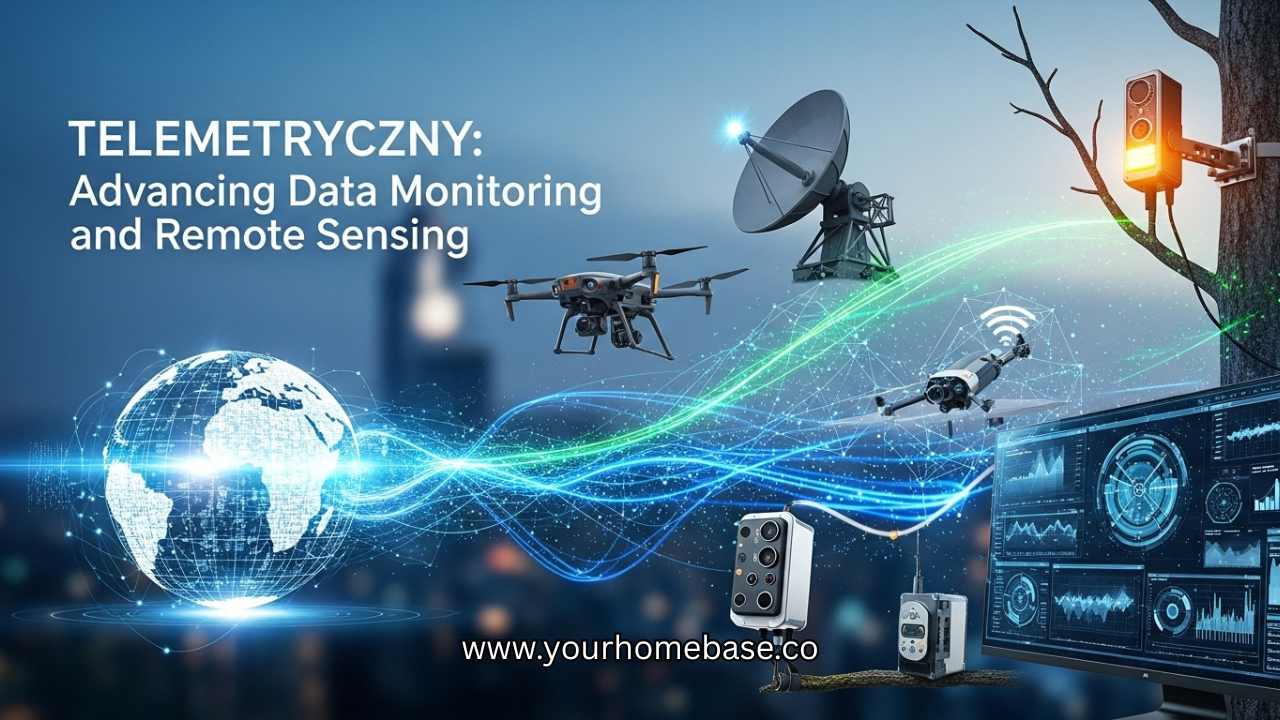
In a world where data is king, the ability to monitor and analyze information remotely has become indispensable. Enter telemetryczny, a groundbreaking technology that enables real-time data collection from distant sources. Whether you’re tracking agricultural yields or monitoring weather patterns, telemetryczny opens up new possibilities for understanding our environment.
Imagine being able to gather crucial data without needing to be physically present at the site. This innovative approach not only streamlines processes but also enhances decision-making across various industries. From ensuring safe transportation routes to predicting climate changes, the applications of telemetryczny are vast and impactful.
Join us as we delve deeper into how this remarkable technology works, its diverse applications in different sectors, and what the future holds for data monitoring and remote sensing through telemetryczny.
How does Telemetryczny work?
Telemetryczny operates by collecting data from remote sensors and transmitting it for analysis. At its core, telemetry relies on a network of devices that capture specific information like temperature, humidity, or GPS location.
These sensors convert physical measurements into electronic signals. Once the data is digitized, it’s sent via wireless communication protocols to a central system for processing.
The technology utilizes various transmission methods such as cellular networks, satellite links, or Wi-Fi. This versatility allows it to function in diverse environments.
Real-time monitoring is one of its key features. Users can access live data streams through software applications tailored for their needs. The result? Immediate insights and prompt decision-making based on accurate information.
With advancements in IoT (Internet of Things), telemetry has become more efficient and reliable than ever before. Its seamless integration into existing infrastructures enhances its effectiveness across multiple sectors.
Applications of Telemetryczny in various industries (agriculture, weather monitoring, transportation)
Telemetryczny plays a vital role in agriculture by enabling precision farming techniques. Farmers can monitor soil moisture levels, crop health, and weather conditions in real time. This data helps optimize irrigation schedules and improve yield.
In the realm of weather monitoring, telemetryczny systems collect atmospheric data from remote locations. Sensors track temperature changes, wind speed, and humidity levels. Meteorologists rely on this information for accurate forecasts and timely alerts.
Transportation is another sector benefiting immensely from telemetryczny technology. Fleet managers use it to monitor vehicle performance and location continuously. This leads to better route planning and fuel efficiency.
Moreover, emergency responders utilize telemetryczny tools during natural disasters. They gather crucial information about affected areas quickly, allowing for prompt assistance efforts that save lives. Each application highlights how telemetryczny enhances decision-making across diverse industries while improving overall efficiency.
Advantages of using Telemetryczny
Telemetryczny offers numerous advantages for data monitoring and remote sensing. First, it enables real-time data collection from diverse environments. This immediacy allows for quicker decision-making across various sectors.
Another significant benefit is the ability to gather information from hard-to-reach locations. Whether it’s deep in a forest or high above ground, telemetryczny systems can relay crucial data without human presence.
Cost-effectiveness also plays a key role. By reducing the need for manual checks and on-site inspections, organizations save time and resources.
Furthermore, telemetryczny promotes enhanced accuracy in data collection. Automated systems minimize human error, ensuring that the gathered information is reliable and actionable.
These systems often integrate seamlessly with existing technology platforms. This compatibility enhances overall system efficiency while streamlining workflows across different industries.
Challenges and limitations of Telemetryczny
Telemetryczny, while revolutionary, faces several challenges. One significant hurdle is data security. With sensitive information being transmitted remotely, the risk of interception and unauthorized access is a major concern for many industries.
Another limitation lies in connectivity issues. Remote areas may lack reliable internet or network coverage, causing disruptions in data collection and monitoring. This can hamper timely decision-making processes.
Additionally, the cost associated with implementing telemetry systems can be prohibitive for smaller enterprises. High initial investments in technology and infrastructure often deter organizations from adopting these solutions.
Moreover, standardization across devices remains a challenge. Different manufacturers may use varied protocols, making interoperability difficult. This fragmentation complicates integration efforts within existing systems.
The complexity of managing vast amounts of data generated by telemetry can overwhelm users without proper analytical tools or expertise at their disposal.
Future developments and potential impact on data monitoring and remote sensing
The future of telemetryczny is poised for groundbreaking advancements. Emerging technologies like AI and machine learning are enhancing data analysis capabilities. This means faster processing times and more accurate insights.
Integration with IoT devices will also play a significant role. As connectivity improves, real-time monitoring across various sectors becomes feasible on an unprecedented scale. Imagine farms equipped with smart sensors that instantly relay soil conditions or transportation fleets optimized through continuous tracking.
Moreover, advancements in satellite technology promise better remote sensing accuracy. With high-resolution imaging, industries can obtain detailed environmental data, leading to informed decision-making processes.
Sustainability initiatives could greatly benefit from these developments as well. By harnessing telemetryczny data, organizations can minimize waste and improve resource management effectively.
Incorporating advanced telemetryczny systems will undoubtedly transform how we approach data monitoring in the years to come. The potential impact is vast and filled with opportunities waiting to be explored.
Conclusion
Telemetryczny is transforming the way we monitor and analyze data across various sectors. Its ability to provide real-time insights makes it invaluable, especially in agriculture, weather monitoring, and transportation. By leveraging advanced sensors and data analytics tools, industries can optimize their operations like never before.
The advantages of using telemetryczny are significant. It enhances efficiency, reduces costs, and improves decision-making processes. However, challenges remain—issues related to data security and connectivity must be addressed for widespread adoption.
Looking ahead, advancements in technology will likely enhance the capabilities of telemetryczny even further. As organizations continue to embrace remote sensing solutions, the impact on operational effectiveness could be profound.
With its promising future trajectory, telemetryczny stands poised to redefine how businesses approach data monitoring and analysis. The ongoing evolution of this technology may very well lead us into a new era of information accessibility and application.