
Teeth are more than just a set of pearly whites—they play a crucial role in our daily lives. From biting into your favorite apple to helping us articulate words, human teeth are essential tools that enable us to enjoy food and communicate effectively. But have you ever stopped to wonder how many teeth humans actually have? The answer may surprise you! Join us as we explore the fascinating world of human teeth, their types, functions, and what influences their number throughout our lives. Whether you’re curious about baby teeth or adult dentition, this journey will give you insights that go beyond mere numbers. Let’s dive in!
The Different Types of Teeth and Their Functions
Humans have four distinct types of teeth, each designed for specific functions.
Incisors are the sharp, flat teeth at the front. They play a key role in biting and cutting food. Their thin edges make them perfect for grabbing onto fruits and vegetables.
Next are canines, often referred to as cuspids. These pointed teeth sit next to the incisors and excel at tearing food apart. They’re especially useful when dealing with tougher meats.
Premolars come next; they have a broader surface designed for grinding and crushing food into smaller pieces. This function is essential for proper digestion.
Molars are located at the back of your mouth. With their larger surfaces and multiple cusps, they effectively chew food down to a manageable consistency before swallowing. Each tooth type works together seamlessly to aid in eating efficiently.
Baby Teeth versus Adult Teeth
Baby teeth, also known as primary teeth, begin to emerge around six months of age. These tiny chompers usually total 20 in number and serve a crucial role in early development. They help children chew food and speak clearly.
As kids grow, these temporary teeth make way for adult teeth through a natural process called exfoliation. This transition typically starts around age six and continues until the late teens.
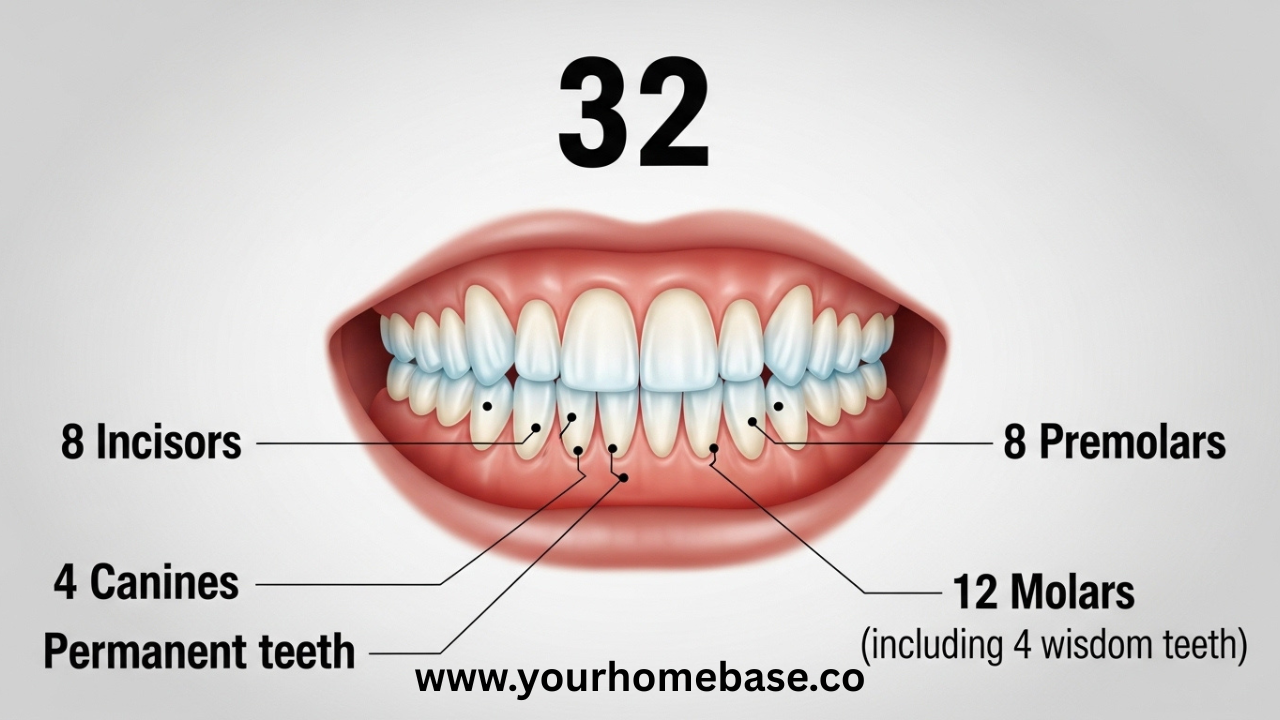
Adult teeth are larger and more durable than baby ones. An adult mouth usually holds 32 permanent teeth when including wisdom teeth. Each type is designed for specific functions – from tearing to grinding food.
The shift from baby to adult teeth is essential for proper oral health, ensuring that individuals can enjoy a varied diet throughout their lives. Understanding this transition helps highlight the importance of caring for both sets during different life stages.
How Many Teeth Do Adults Have?
Adults typically have 32 teeth, including the wisdom teeth. This complete set includes incisors, canines, premolars, and molars.
Incisors are the sharp front teeth used for biting into food. Canines help tear food apart. Premolars and molars play a vital role in grinding and chewing.
It’s important to note that some adults may have fewer than 32 teeth due to extractions or other dental issues. Wisdom teeth often emerge in late teens or early twenties but are sometimes removed if they cause crowding or discomfort.
The presence of dental work like implants can also impact tooth count. Regular check-ups with your dentist can ensure a healthy mouth and proper tooth care throughout life.
Factors That Can Affect the Number of Teeth in Adults
Several factors can influence the number of teeth adults have. Genetics plays a crucial role; some individuals may naturally have fewer teeth due to inherited traits.
Dental health is another significant factor. Conditions like periodontal disease can lead to tooth loss over time. Poor oral hygiene practices often exacerbate this issue, resulting in cavities or infections.
Accidents and injuries also contribute to missing teeth. A fall or sports-related incident can cause trauma that necessitates extraction.
Lifestyle choices, such as smoking or excessive alcohol consumption, further impact dental health and may lead to premature tooth loss.
Age cannot be overlooked. As people grow older, natural wear and tear on their teeth can result in more extractions and a lower overall count of healthy adult teeth.
Common Dental Issues and Their Impact on Tooth Count
Dental issues can significantly affect tooth count. For instance, cavities may lead to decay that requires extraction if left untreated. Regular check-ups can catch these problems early, but neglecting dental hygiene often results in more severe consequences.
Gum disease is another common concern. It not only causes inflammation and bleeding but can also result in tooth loss over time. The bacteria from gum infections weaken the attachment of teeth to the jawbone.
Trauma or injury is a frequent cause of missing teeth as well. Accidents during sports or falls can easily knock out or damage a tooth beyond repair.
Oral health conditions such as bruxism (teeth grinding) might wear down enamel and contribute to premature tooth loss too. Addressing these issues promptly is essential for maintaining your smile and overall dental health.
Conclusion
Taking care of your teeth is essential for maintaining a healthy and confident smile throughout your life. Regular dental check-ups, along with good oral hygiene practices like brushing and flossing, can help prevent issues that may affect the number of teeth you have.
A balanced diet rich in vitamins and minerals also plays a crucial role in dental health. Avoiding excessive sugar can reduce the risk of cavities, which are one of the most common threats to tooth preservation.
Remember that every tooth counts when it comes to chewing effectively and speaking clearly. Understanding how many teeth do humans have helps us appreciate their value even more. Protect them well, and they will serve you faithfully for years to come. Embrace habits that nurture not just your smiles but also overall well-being—after all, healthy teeth contribute significantly to a fulfilling life filled with joy!